Más opciones Para Salir
 Cerrar
Categorías
Archivos
Suscríbete
Artículos (Rss)Comentarios (Rss)
Estadísticas
1,536 Lugares Para Salir103 Comentarios

Содержание
High cost of commitment on the part of key user personnel. Potential for feature creep where more and more features are added to the system over the course of development. Danger of misalignment of developed system with the business due to missing information. More speed and lower cost may lead to lower overall system quality.
This phase’s main task is to put the design prototypes into beta systems and then into a working model. This way, RAD allows project managers and stakeholders to arrange all project changes in real-time and implement them immediately. This allows greater efficiency, faster release and time-to-market, and effective communication. Node js and Express js are rapid development methodology two of the most popular web frameworks for building modern applications. N this article, we’ll explore the differences between Express js vs Node js and help you choose which platform is right for your next project. No wonder the global rapid application development market is set to grow to $46.2 billion by 2023, as stated in a recent market report.
With RAD model of outsource app development, the client can see the demo of the final product much faster. During the creation of a prototype for any product, to save time and money, it is essential to create one that can be reused for fast changes. The overall testing time is reduced in the RAD model as the prototypes are independently tested during every iteration. However, the data flow and the interfaces between all the components need to be thoroughly tested with complete test coverage. Since most of the programming components have already been tested, it reduces the risk of any major issues.
In all agile methods, teams develop the software in iterations that contain mini-increments of the new functionality. There are many different forms of the agile development method, including scrum, crystal, extreme programming , and feature-driven development . The Rapid Application Development approach relies on rapid cycles of iterative development, prototyping, reiterative user testing and the re-use of software components. A RAD platform acceleratesvisual developmentwith out-of-the-box themes, templates, widgets, and responsive designs while generating standards-based front-end code. It allows for seamless, secure, and scalableintegrationto standard enterprise systems with an API-centric approach. It also supports continuous, flexible, and one-clickdeploymentwithout lock-in and CI/CD of your choice.
We automate the coding of standard application functions like adding and viewing records, viewing lists of records, searching, and filtering and all general database interaction. This drastically reduces the time needed to build the application, resulting in earlier delivery. It also provides a front end framework starter kit and a number of common aspects of any application such as user management, login, logout and session management etc. Quicker development times, lower costs and bug elimination are just some of the ways that Rapid Application Development benefits our customers. RAD is a predecessor of Agile, but Agile encompasses far more than a development model.
SAFe and DevOps: The Perfect Duo.
Posted: Wed, 21 Sep 2022 06:32:31 GMT [source]
Aims to produce high quality systems quickly, primarily via iterative Prototyping , active user involvement, and computerized development tools. The RAD model is a good way to improve collaboration between users, customers, and developers at all stages of the development process. Involving users is particularly useful in scenarios where user requirements are uncertain. Bringing users and developers together bridges communication gaps and provides ample opportunities to get the best out of customer involvement. Different ways to deal with quick advancement incorporate responsive, agile, and unified models.
Hence, with a unified vision, this methodology is useful for big projects. The team members and developers need to be highly skilled and be able to assume different roles. A small team with lots of collaboration is required to succeed therefore this model is not very suitable for large teams.
In contrast with the Waterfall methodology, with RAD, the main focus is a prototype. With this mindset, the development team works rapidly to build the simplest working version of the final product . With each iteration, the prototype looks like https://globalcloudteam.com/ the final product more and more. Because of the competitiveness of the app development industry, RAD has become quite popular for app development. RAD methodology gives the opportunity to develop at a higher speed focus on user feedback.
Rapid application development is a methodology that focuses on developing applications rapidly through frequent iterations and continuous feedback. As the increasingly competitive software market emphasises a stronger demand for new applications, the IT industry is feeling pressure to deliver working products faster, and RAD is becoming a necessity. However, there has been some recent confusion over how rapid application development methodology differs from Agile development methodologies. Another thing to note here is that rapid application development prefers having a single team without too many members. This allows for fast communication with quick meetings for quick information transfer.
This third phase is important because the client still gets to give input throughout the process. They can suggest alterations, changes, or even new ideas that can solve problems as they arise. Technical requirements (e.g., response times, throughput, database sizes, etc.) are tight for the equipment that is to be used. There is no project champion at the required level to make things happen. The project team is large or there are multiple teams whose work needs to be coordinated. Project scope is focused, such that the business objectives are well defined and narrow.
The attributes of all data sets is identified and defined. The relation between these data objects are established and defined in detail in relevance to the business model. During this step, stakeholders sit together to define and finalize project requirements such as project goals, expectations, timelines, and budget. When you have clearly defined and scoped out each aspect of the project’s requirements, you can seek management approvals. That’s because there’s a constant need for communication.
Rapid app development can be expensive because you need to engage the best specialists in the market. The bright side is, you can hire high-skilled professionals outside your region, which is less expensive. Getting started with rapid application development involves four basic steps.
Since there is no detailed preplanning, it makes it easier to incorporate the changes within the development process. Those who research development methodology compare one framework to another. Most commonly, rapid application development is directly contrasted with agile software development. This has resulted in some confusion over the term RAD even among IT professionals. It is important to distinguish between RAD as a general alternative to the waterfall model and RAD as the specific method created by Martin. The Martin method was tailored toward knowledge intensive and UI intensive business systems.
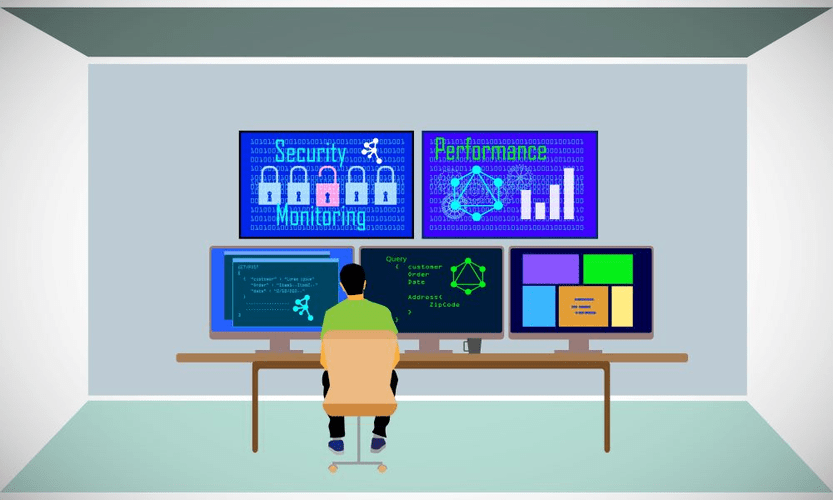
SDLC is time intensive, it allows for minimum iterations, there is little user interaction and requires high coding efforts. In alignment with the change in pace of enterprise needs, RAD offers a simpler approach to application development, one that requires minimal coding and is highly flexible. The answer to which approach works best is based on the enterprise needs.
User training falls under this phase as required based on your product. Elements have to be designed and constructed from the ground up as per project requirements and hence, are not reusable. Use of predefined themes, templates, layouts and micro applications which are tested and ready-to-use. Extensive user interaction with reviews and suggestions on a timely basis during every iteration and phase. Involves stringent documentation and reviewal at every stage of development. Do you have a close-knit team of skilled professionals?
In a rapid development environment, the client is there every step of the way and the developer has the opportunity to present their work frequently. This gives them the confidence that when the final product is delivered, their work receives appreciation. The RAD framework was introduced by technology consultant and author James Martin in 1991, who recognised and took advantage of software’s infinite malleability to design development models. RAD was a precursor to agile project management, becoming increasingly popular with agile businesses looking for methods that keep pace with their growing business and client needs. Focusing on rapid prototyping, release cycles and iterations over costly planning, rapid application development is driven by user feedback, rather than strict planning.
The on-the-fly approach accommodates unexpected changing of requirements. When projects have tight deadlines, rapid application development methods hold teams accountable to deliver a working product as quickly as possible. Rapid application development alleviates the complications found in traditional software development methods, focusing on customer satisfaction through early and continuous delivery of valuable, working software. While speed is emphasised, specific time frames are not recommended. RAD welcomes changing requirements, even late in development. All stakeholders communicate frequently and in real time to measure progress, solve problems, and improve efficiency.
Formal reviews and audits are more difficult to implement than for a complete system. Potential for violation of programming standards related to inconsistent naming conventions and inconsistent documentation. Potential for inconsistent designs within and across systems. Key emphasis is on fulfilling the business need, while technological or engineering excellence is of lesser importance.
Other development models such as the waterfall model prefer having larger teams divided into different specializations. A major challenge with the waterfall model is that once the product moves into the testing phase, the tester cannot go back to reiterate and make changes to the core functions and features. This essentially leaves teams with a software that may or may not fit the end-users’ evolving requirements. Prototypes can be usable and can evolve into the completed product.
They are bought and sold on the Internet, and the exact mechanisms usually encode them as many cryptocurrencies. As long as the product being worked on can be easily divided into separate units, the RAD model can be implemented. If the division is not possible, the RAD model may not work. Have already been examined previously, there should not be any major problems with your prototype. Iteration time can be short with use of powerful RAD tools. RAD SDLC model should be chosen only if domain experts are available with relevant business knowledge.
In the world of project management, “agile” is the method du jour. Data for the project already exists , and the project largely comprises analysis or reporting of the data. Engenders a greater level of commitment from stakeholders, both business and technical, than Waterfall, Incremental, or Spiral frameworks. Users are seen as gaining more of a sense of ownership of a system, while developers are seen as gaining more satisfaction from producing successful systems quickly.